
Lock
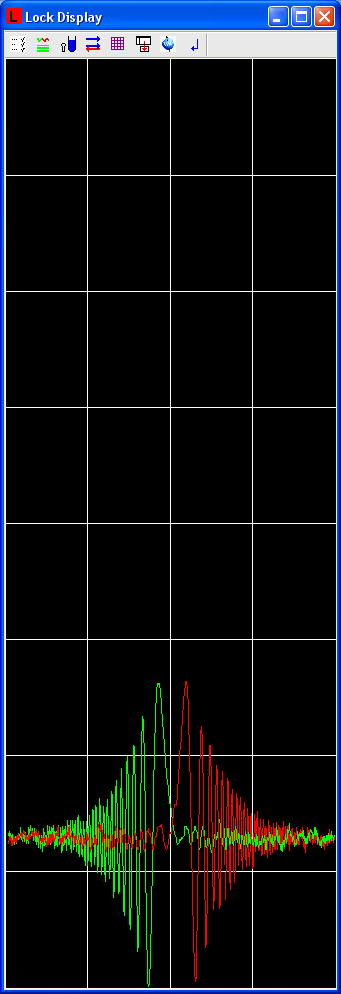

The lock system monitors the resonance frequency of the signal in the lock channel and if a shift in frequency is detected the value of the magnetic field is adjusted accordingly. This negates the effect of magnet field drift during the acquisition of long experiments. In aqueous samples the lock is maintained using the deuterium signal from 2H2O. When locking you are matching the lock field strength (Z0) with the resonance frequency of the deuterated solvent. In Bruker systems. This is done by ensuring that the crossing point of the two parts of the lock sweep display is on the centre line of the lockdisp. The lock phase should be set such that the initial curve around the centre of frequency should have a positive slope. On most Bruker systems this process is automated using the “lock” command and selecting the correct solvent but it is worth checking manually that the lock phase is correct.

